
How Can Customer Journey Mapping Fix Pricing?
Is Pricing Perception Hurting Purchase Decisions—and How Can Customer Journey Mapping Fix It?
If you’ve had to make pricing decisions over the last few years, you’re not alone in feeling a bit uneasy about it.
The 2020 – 2023 stretch created a perfect storm—supply chain issues, rising costs, inflation. For many companies, pricing became less of a strategy and more of a reaction. Costs went up and prices followed.
But now, even as things settle (or unsettle again with global trade disruptions), one question keeps coming up in conversations with leadership teams:
“How do we get pricing right? ..… or are we quietly losing customers because of how they perceive it?”
That distinction—price vs. perceived value—is where most of the problem sits.
It’s Not Just About Price—It’s About What Customers Think They’re Getting
Customers don’t evaluate pricing in isolation. They’re constantly asking themselves:
- Is this worth it?
- How does this compare to other options?
- Do I trust this brand enough to pay more?
- Does the experience justify the cost?
What’s interesting is that two companies can charge the same price and get very different reactions. One feels “fair.” The other feels “too expensive.”
That gap has very little to do with math—and everything to do with perception.
The Same Questions Keep Coming Up
Across industries, the questions tend to sound very similar:
- Our costs went up—how much of that can we realistically pass on?
- At what point does a price increase start to push customers away?
- How will customers compare our pricing to competitors?
- If we raise prices, what happens to retention and loyalty?
- Do we need to improve the experience before increasing price?
- How do we communicate the change without creating backlash?
On the surface, these look like pricing questions. In reality, they’re questions about how customers move through the buying journey and make decisions.
Where Pricing Actually Wins or Loses
One of the biggest misconceptions is that pricing decisions happen at checkout. They don’t. By the time a customer is looking at your price, they’ve already formed an opinion—often subconsciously—based on everything that came before it.
A few examples:
- If your brand positioning sets a premium expectation, higher pricing feels natural
- If your messaging is unclear, even a fair price can feel too high
- If competitors are easier to compare, you lose control of the narrative
- If the experience has friction, price becomes the easiest reason to walk away
So pricing perception is really built across the entire journey:
- Awareness
- Consideration
- Comparison
- Decision
- Post-purchase validation
Miss something in any one of those, and pricing starts to feel like a problem—even if it isn’t.
Where Customer Journey Mapping and Research Helps
This is where customer journey mapping becomes incredibly useful—not as a “nice-to-have,” but as a practical way to make better pricing decisions.
It helps answer questions like:
- Where are customers starting to hesitate?
- At what point does price become a concern?
- What are they comparing you against—and why?
- What parts of the experience are strengthening (or weakening) perceived value?
And just as importantly:
- What needs to be fixed before you touch pricing?
Because in many cases, the issue isn’t the price itself. It’s everything surrounding it.
A Real World Case Study
We worked with a residential home services company that found itself in a familiar situation.
Costs had gone up across the board—vehicles, parts, fuel, labor. They knew they needed to raise prices on two of their core services, but there was real concern internally about customer fallout.
Instead of guessing, they took a step back and looked at it through the customer lens.
The approach combined a few things:
- Van Westendorp pricing research to understand acceptable ranges
- Customer journey mapping to identify where value perception was strong vs. weak
- Qualitative interviews to hear how customers actually thought about pricing and service
A couple of things became clear pretty quickly:
- Customers were more open to price increases than the team expected
- There were two specific service gaps that were quietly undermining value perception
- Messaging around pricing mattered more than anyone initially thought
Based on that, the company made a fairly bold move:
- Prices were increased by about 20% (in line with competitors)
- Service improvements were rolled in at the same time
- Communication was adjusted to clearly explain the value
The result?
- Very limited customer defection
- Sentiment stayed strong
- Profitability improved significantly—almost doubling!
The key wasn’t just raising prices. It was aligning pricing with what customers actually valued.
The Part Most Companies Don’t See
What makes pricing tricky is that the downside isn’t always obvious. You don’t always see a dramatic drop in sales. Instead, it shows up more quietly:
- Customers hesitate a little longer
- Conversion rates dip slightly
- Some customers choose competitors without saying why
- Others downgrade or buy less frequently
Individually, these don’t look like major issues. But together, they add up—and for many companies, it can mean 5% to 20% of revenue slipping away without being clearly attributed to pricing.
Here is another article to help you understand how pricing and other key factors act as emotional drivers in the shopping journey:
A Few Takeaways Worth Keeping in Mind
- Pricing is as much a perception issue as it is a financial one
- Customers decide if something is “worth it” long before checkout
- Small friction points in the journey can make pricing feel wrong
- Improving perceived value often creates more room for pricing than expected
Here is another example of how pricing research can be incorporated into your customer journey understanding:
FAQ
What exactly is pricing perception?
It’s how customers feel about your price relative to what they believe they’re getting. It’s influenced by expectations, experience, and alternatives—not just the number itself.
Why do customers push back even when pricing is competitive?
Because they’re not comparing just price—they’re comparing value. If something feels off in the experience, price becomes the easiest objection.
How does customer journey mapping help?
It shows where perception is being shaped—where value is strong, where it breaks down, and where pricing starts to feel like an issue. To learn more, read these articles:
- What Is Customer Journey Mapping?
- The Ultimate Guide to Customer Journey Mapping: Steps, Examples, and Best Practices
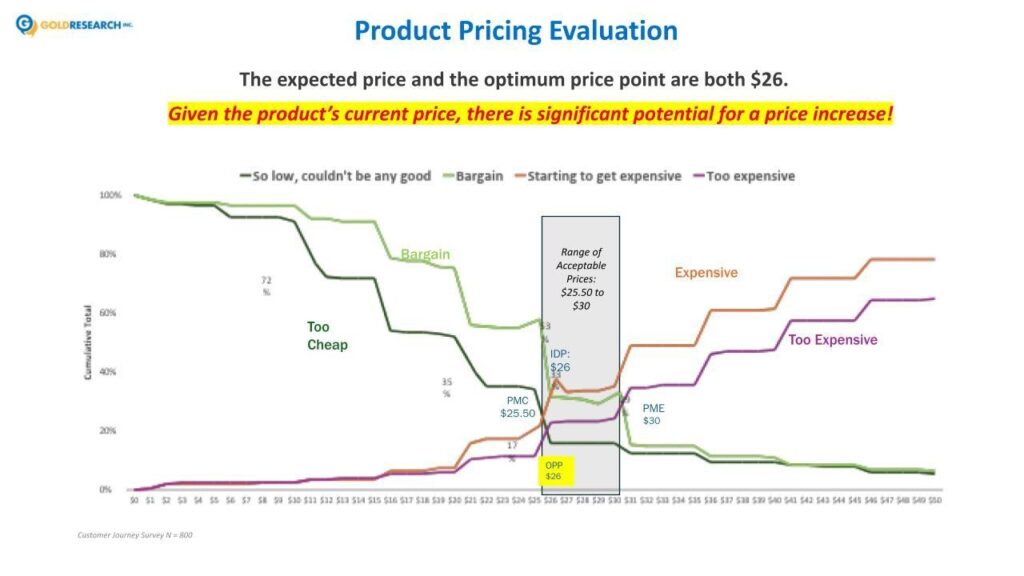
What is Van Westendorp research?
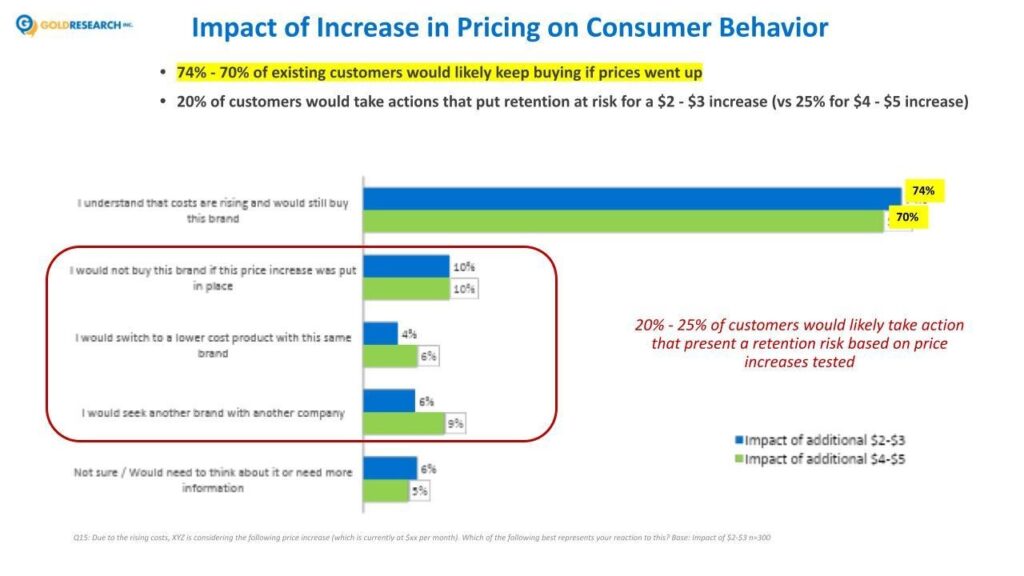
It’s a method that helps identify price ranges customers consider acceptable, including points where pricing feels too expensive or too cheap. Here are some examples of what outputs look like:
Should we always improve the product before raising prices?
Not always—but often there are small improvements that can make a big difference in how pricing is received.
How should price increases be communicated?
Clearly and simply. Customers don’t need a long explanation, but they do need to understand the value behind the change.
How much revenue is typically at risk?
It varies, but many companies are unintentionally losing somewhere between 5% and 20% due to friction tied to pricing perception.
Final Thought
Most companies spend a lot of time debating what the “right” price should be. Fewer spend time understanding how that price is actually experienced by customers.
And that’s usually where the real opportunity sits.
